New build home mortgage advice
From buying off-plan to navigating developer incentives and cladding checks, here's what actually changes your mortgage options when you're buying new.

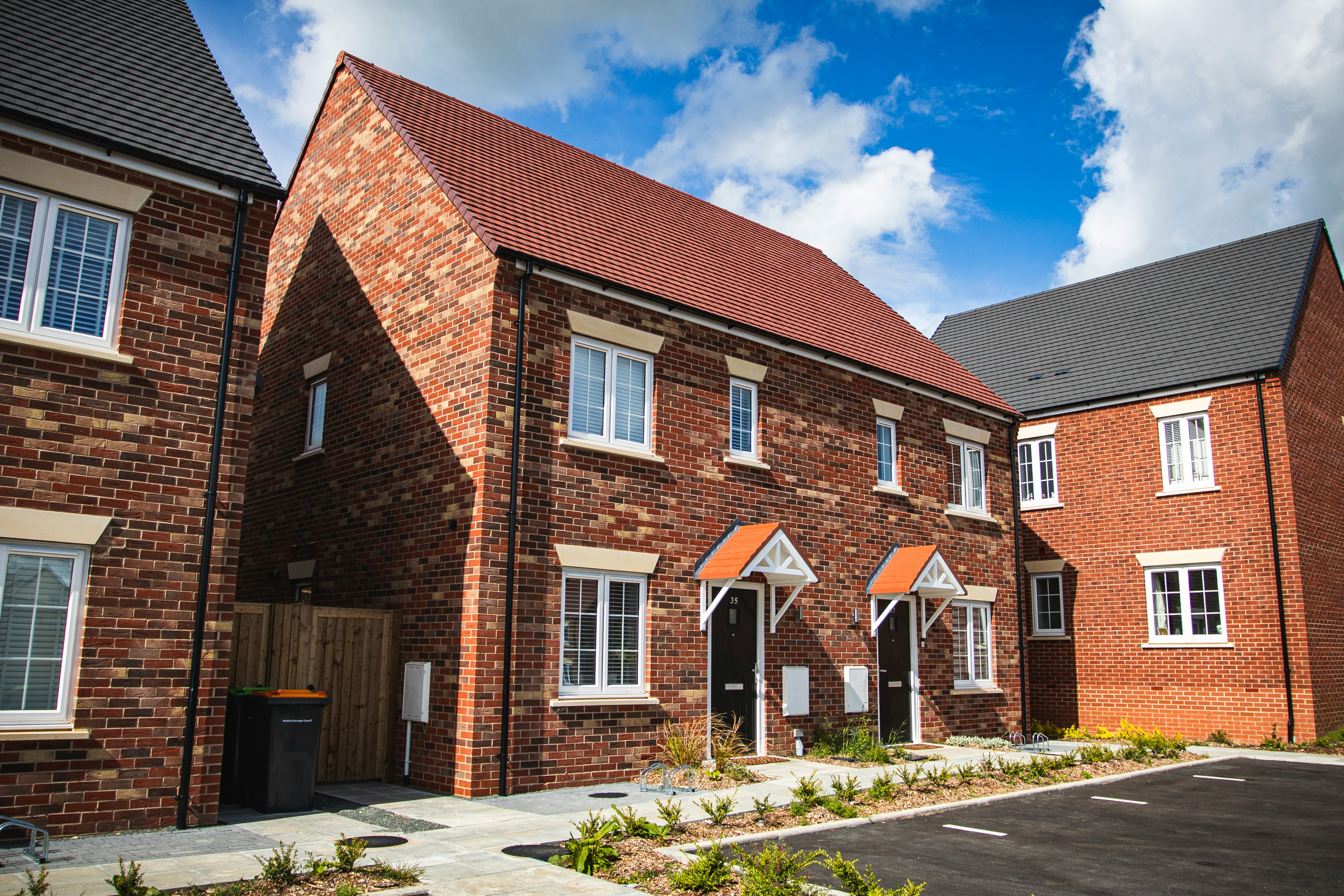
Key takeaways:
There’s no single “best” lender for new builds, as it depends on the deposit, whether it’s a house or flat, and any developer incentives involved.
Some lenders go to 95% LTV (with a 5% deposit) for houses, while flats are usually capped lower. We found that 4 times as many people bought new-build houses as flats.*
If you’re buying off-plan, be aware of your offer validity, as a 6-month offer might expire before the build is finished.
A mortgage broker can help you find a new build mortgage and advise on your unique situation.
In this guide

What actually counts as a "new build"?
Good question, and it trips people up more than you'd think. Most home loans lenders define a new build as a property that's never been lived in before, or one that's been completed within roughly the last two years. It's not just brand-new houses either — this usually covers:
Conversions, such as old offices, pubs or warehouses turned into flats or houses
Big renovation projects where a building's been stripped back and rebuilt
New-build flats and houses
Why does the definition matter? Because lenders often apply stricter rules in that first year or two, smaller maximum loan sizes, extra checks, and a requirement for a proper structural warranty. Once the property's a bit older, it usually gets treated like any other resale home.
Houses and flats are not the same new build case
Lenders treat new build houses and new build flats as different risk profiles, and it shows up directly in what LTV they'll offer. A flat in the same price bracket as a house will often need a materially bigger deposit for the same lender, because flats carry extra considerations: building height, cladding, service charges and how many units in the development the lender is already exposed to.
Here’s a breakdown of the difference between buying a new build house or flat.
Deposit | New build house | New build flat | What tends to apply |
5% | 95% LTV - select lenders | Usually not available | Mortgage guarantee scheme, up to £600k |
10% | 90% LTV - widely available | 90% LTV - narrower panel of lenders available | Mainstream territory |
15% | 85% LTV - broad choice of lenders available | 85% LTV - broad choice of lenders available | Most lenders converge here |
20%+ | 80% LTV - sharpest rates | 80% LTV - sharpest rates | Full market opens up, best pricing |
Bands are indicative and vary by lender, building height, warranty type and site exposure. Please confirm current criteria with a broker before relying on a specific figure.
What we're seeing from new build buyers
Looking at our own 2025 mortgage data, new build houses are the clear favourite among our customers who told us they were buying new, outnumbering new build flats by roughly 4 to 1.*
Deposits varied a fair bit between what customers estimated early on (around £72,000 on average) and the actual amount once the mortgage completed (around £78,600)† — a useful reminder to build in some buffer when budgeting, as costs and figures often shift a little between application and completion.
Houses vs. flats vs. conversions
New build houses
Good news if you're buying a new build house, this is the easiest category for lenders to say yes to. Most mainstream lenders are comfortable here, and builders offering incentives up to around 5% of the purchase price are usually fine too.
New build flats
Flats get a bit more scrutiny. Lenders tend to cap how much they'll lend at a lower level than for houses. Building height, cladding, and how many flats in the development the lender has already mortgaged all come into play.
Cladding and EWS1
If your new build flat was built after 2018, there's a good chance you won't need an EWS1 form at all - it's built to newer, post-Grenfell fire safety standards. Older buildings, or those with certain types of cladding, might need one. The rating matters:
A1 or A2: No combustible materials, generally no issue
B1: Some combustible material but low risk, usually still mortgageable, though fewer lenders will consider it
B2: Remediation needed, and this seriously narrows your options until it's sorted
It’s worth checking with the developer early whether an EWS1 is needed so it doesn't catch you out later.
Conversions
Old office blocks, pubs, and warehouses turned into homes are usually treated as new builds by lenders so the same deposit and warranty rules apply. The lender pool here is a bit smaller, and it's worth checking whether the conversion had full planning permission, as some "permitted development" conversions face extra caution from lenders.
Site exposure
Here's something that catches a lot of buyers out: lenders cap the percentage of any single development they're willing to lend on – usually around 25-33% of the units.
If a lender's already close to that limit on your development, they could turn your application down even if everything else about your application looks good. This is especially common on bigger developments or later phases of a site. We check this before we recommend a lender, so you're not caught out mid-application.
New build mortgage lenders
Below are just some lender’s criteria for new build mortgages.
Lender | Max LTV: Houses | Max LTV: Flats | Key exceptions / notes |
|---|---|---|---|
Nationwide Building Society | 95% LTV | 85% LTV | — |
Skipton Building Society | Not specified in source criteria | 95% LTV (incl. Shared Ownership & First Homes) | Drops to 90% LTV if builder incentives reach 5% of purchase price |
NatWest | 95% LTV | 90% LTV | Drops to 75% LTV if the loan amount exceeds £1 million |
Santander | 95% LTV | 95% LTV | — |
Barclays | 95% LTV | 85% LTV (incl. maisonettes) | — |
HSBC | 90% LTV | 85% LTV | Subject to the lender's overall loan limit guidance |
Halifax | 95% LTV (houses/bungalows) | 85% LTV | Drops to 75% LTV for second home/buy-to-let; 80% LTV for builder/developer-refurbished conversions |
Table correct as of 4 August 2026. Lenders may change criteria and deals are subject to change.
Want to get ahead of the mortgage application process?
Our experienced mortgage brokers can help you:
Arrange a mortgage in principle
Compare hundreds of new build mortgage deals
Prepare and submit a mortgage application - and quickly

New build mortgage situations
Buying off plan under a tight deadline.
You agree to purchase a home before or during its construction based on floor plans and site models.
Developers routinely enforce a 28-day exchange deadline from the moment you reserve the plot. Securing a mortgage agreement in principle, completing property valuations, and finalizing legal contracts must happen very quickly.
Construction delays and expiring mortgage offers
Delays push your mortgage offer off the cards.
Standard mortgage offers are typically valid for 3 to 6 months. If bad weather or supply shortages delay construction, your mortgage offer might expire before the build finishes.
Thankfully, specialist new build mortgage products exist with extended validity periods (often up to 9-12 months). If an offer does expire, the lender will re-assess your finances, and if property market values drop in the interim, you could face a valuation gap.
Be sure to keep in close contact with your mortgage broker and developer so you can be prepared if there’s a gap.
Higher deposit requirements (of flats vs houses)
You are faced with the decision between affording a house or a flat.
Lenders apply stricter Loan-to-Value (LTV) limits on new builds to hedge against potential initial depreciation.
Houses: Generally require a 10% to 15% deposit.
Flats / apartments: Considered higher risk by many lenders, frequently requiring 15% to 25% deposits.
Navigating developer incentives
The home you like has incentives offered by the housing development.
Developers often entice buyers with perks like paying Stamp Duty, covering legal fees, upgraded kitchen fittings, or direct "deposit contributions."
Keep in mind that most lenders cap total incentives at 5% of the purchase price. If incentives exceed this limit, the lender may recalculate the loan based on a lower property valuation rather than the agreed purchase price.

Expert mortgage advice for new build buying
We're a fee-free mortgage broker, comparing mortgages from 60+ lenders. We know which lenders are currently comfortable with new builds, incentive packages, and specific developments. And we also check things like site exposure and warranty acceptance before you apply, so you're not blindsided halfway through. You get a mortgage in principle for free, with no impact on your credit score, before you commit to anything.
We're not tied to any one lender, and we don't get paid more for recommending one over another so the mortgage advice you get is about what's actually right for you.
New build mortgage FAQs
Can you get a new build mortgage with a 5% deposit?
Yes, on new build houses, through the Mortgage Guarantee Scheme (up to £600,000 property value) with participating lenders. New build flats are treated more cautiously and 5% deposit options are much rarer, most lenders want 10% or more on flats.
Is Help to Buy still available for new builds?
No, not in England, Scotland or Northern Ireland, the Help to Buy Equity Loan scheme closed to new applicants in those nations. It remains open in Wales for eligible first-time buyers until 31 March 2027. Elsewhere, the Mortgage Guarantee Scheme and Shared Ownership are the current alternatives.
Do all new build flats need an EWS1 form?
No. It typically depends on building height (commonly triggered above roughly 11 metres) and the external wall construction. Many post-2018 new builds don't require one at all because they were built to updated fire safety standards. Always confirm directly with the developer or managing agent rather than assuming either way.
Why do lenders offer lower LTV on new build flats than houses?
New build flats carry additional risk considerations for lenders, such as building height and fire safety rules, service charge exposure, and how concentrated their lending already is on that specific development. Houses don't carry the same building-wide considerations, which is generally why higher-LTV products are more available on houses.
What happens if developer incentives push above 5% of the purchase price?
Many lenders will still lend, but reduce the valuation used for the mortgage by the amount above the threshold, which effectively increases the deposit you need to find. Above roughly 10% in incentives, some lenders decline the case outright. Disclosing all incentives accurately upfront is essential; omitting them can be treated as mortgage fraud.
How long does a new build mortgage offer last?
Most lenders issue offers valid for 6 to 9 months. For off-plan purchases where completion is further away or uncertain, it's worth choosing a lender known for longer offer periods or extension flexibility, so the offer doesn't lapse before the property is finished.
Disclaimer:
Every effort is made to provide accurate information as of the publishing date. However, given the fast-moving nature of the mortgage market, products or rates may have changed since this was written.
Sources:
* Data shown is from Mojo Mortgages' own customer records, covering the period between 1 January 2025 to 31 December 2025, buying new build houses compared to flats in a 4:1 ratio.
† Deposit figures are from Mojo Mortgages' own customer records for the period 1 January 2025 to 31 December 2025, comparing the average deposit amount customers estimated at application stage (c.£72,000) with the average actual deposit amount at mortgage completion (c.£78,600).