Your remortgage: A big financial decision in 2026
On the lookout for your next mortgage deal? Small differences in mortgage rates can make a big impact on your monthly budget, so it pays to get it right.

Why use Mojo Mortgages?
We're an award-winning broker and will do the heavy lifting to keep your monthly repayments as low as possible.
-
Compare a wide range of lenders: We check 60+ lenders so you don't have to.
-
Expert, human advice: Talk to a dedicated expert who’ll handle the paperwork and chasing lenders.
-
Lock in early: You can often secure a new rate up to 4 months before your current deal ends, helping protect you from future rate rises.
-
No impact on your credit score: Checking your deals uses a soft credit check, so it won’t affect your score.
-
Rate Check Promise: Helping guard against rate movements. Over £2 million saved with Rate Check Promise.*
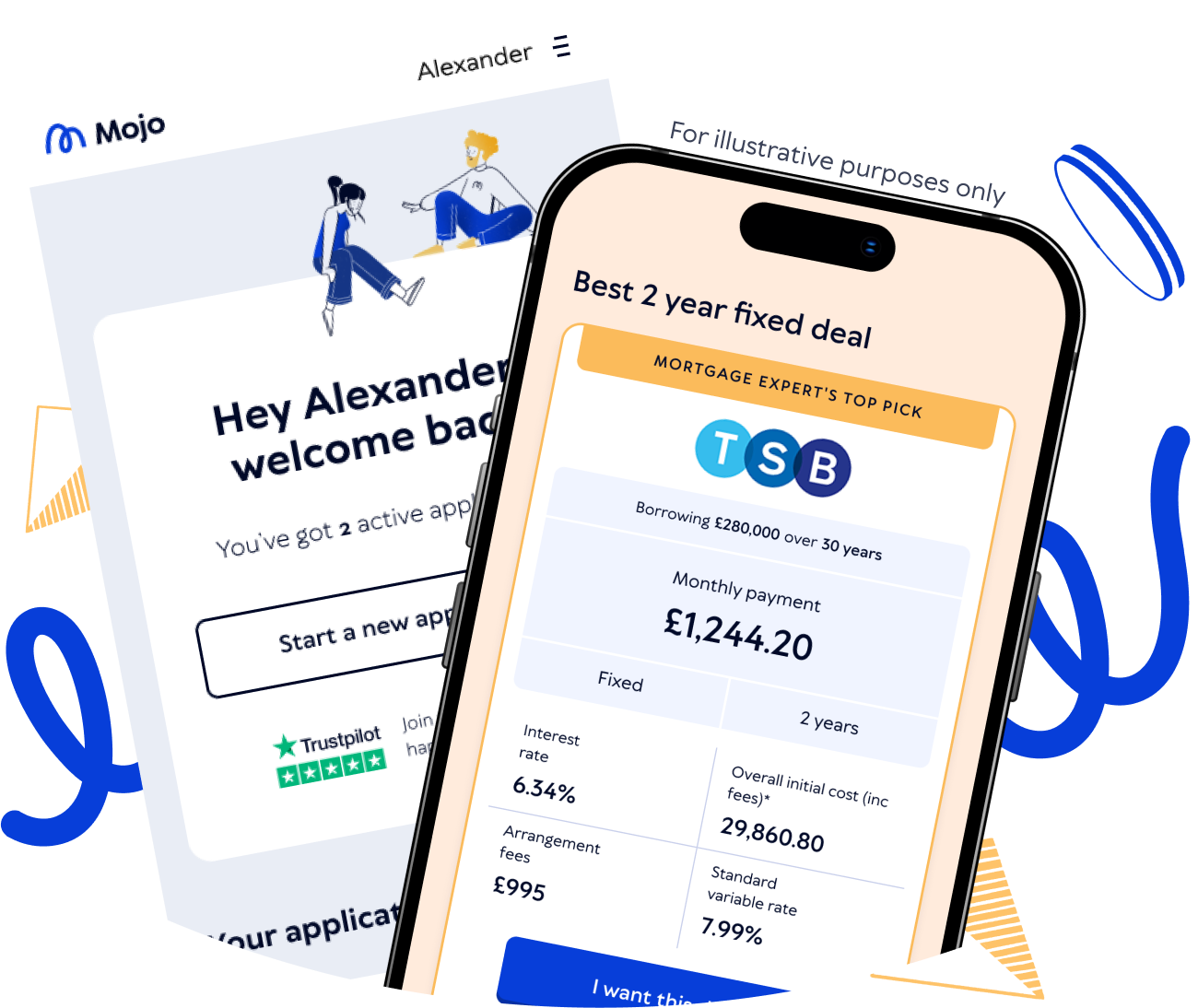
Secure your new mortgage rate now
Lenders have been changing rates recently so you may be able to secure a more competitive rate.
Simply answer questions about your mortgage needs, and if you're eligible, we can book you in to speak to one of our remortgage experts.
Remortgage FAQs
A lender’s most competitive remortgage rates are generally offered to those with high equity (low LTV), a strong credit score and good affordability. That said, each lender’s criteria is different, so it’s essential to shop around.
Here are a few tips to help you improve your chances of securing a more favourable rate:
Compare deals from different lenders. Don’t just compare interest rates - compare the full cost of remortgaging, including all fees and charges
Improve your credit score. Check your credit report for any errors and make sure you make any repayments on time
Reduce your borrowing. You could choose to make overpayments (be mindful of ERCs) or add a lump sum cash deposit to decrease your loan-to-value.
Increase the value of your home. A more valuable property reduces the LTV of your borrowing.
Get expert advice. Engage expert advice from the likes of Mojo Mortgages, who’ll help you find the best fit for your circumstances.
Your existing mortgage is paid off with the new loan. You then simply start repaying the monthly payments on the new mortgage and cease paying the previous one.
You can remortgage before the end of your current deal, but most lenders will charge an early repayment charge (ERC) if you remortgage before the end of the introductory period.
If you’re near the end of your deal period, this might not be too much of a problem, but it tends to get costlier the longer you have left on your existing deal.
You’ll generally need a solicitor or conveyancer when remortgaging if you are switching to a new lender, as they handle the legal transfer of the mortgage and property checks. However, if you're simply changing deals with your current lender and no other changes are being made (such as changes to property ownership), a solicitor usually isn't required.
While you might incur extra costs if you choose your own solicitor when remortgaging, many lenders offer free legal packages as an incentive for switching to them.
Yes you can remortgage if you're self-employed. It can be more difficult if you’ve recently become self-employed, but if you’ve got proof of income for a long enough duration, you shouldn’t be affected. Most lenders want 12-36 months worth of tax returns and accounts, but unless your income has fallen since you bought the property, how you earn your income won’t prevent you getting a remortgage.
How long remortgaging takes will depend on your circumstances, however, it's usually around four to six weeks.
Product transfers can be much quicker, in some cases as short as a day, but usually won’t take more than two weeks.
There are different costs of remortgaging which your mortgage broker will be able to talk you through.
If you leave your current mortgage lender:
Early repayment charge (ERC) - If you remortgage before your existing mortgage term ends, you may have to pay a fee. It can be expensive (usually between 1 and 5% of your remaining principle, so weigh up the costs of any savings from the new mortgage.
Deed of release fees - The cost of your current lender to send the title deeds to your conveyancer. Not all lenders will charge this, but it can be a couple of hundred pounds.
For a new mortgage deal from a different lender:
Arrangement fee - Covers the lender’s admin fees, and usually ranges from £999 to £2,000. You can choose to pay it upfront or add it onto the mortgage (where you’ll pay interest on the fee).
Booking fee - Also called the application or reservation fee, which secures your mortgage deal.
Conveyancing fee - If your conveyancer charges you for transferring your mortgage.
Mortgage broker fee - Some brokers charge a flat fee for advice. Here at Mojo Mortgages, it’s free.
Typically, you should prepare the following documents:
Bank statements and payslips from the previous three to six months
Tax returns for the last 12-36 months, if you’re self-employed
SA302 tax return if you’re self-employed or have more than one source of income
P60 from employer
A form of ID
Proof of address
Numbers of other debts and regular expenses
Takes the stress out of remortgaging
"Used and recommended a few times now. They make remortgaging so easy. Not only do they search for the best offers to suit you but will inform you if lower rates become available before completion. All the team are really friendly and knowledgeable including the insurance team. My remortgage is usually very stressful but Mojo have really helped it become a smooth process."

Laura
2 June 2025
*Data taken using Mojo's internal records, covering the period from February 2025 to March 2026.