11 questions to ask when house hunting
According to our expert mortgage brokers. So when you're searching for a new home and next move, you can make sure that the house you love is also one that makes financial sense.
Buying a house is easily the biggest financial commitment you’ll ever make. While it’s easy to get distracted by a beautiful kitchen or a south-facing garden, a lender views a property through a clinical lens of affordability, risk, and collateral. A mortgage broker bridges this gap by navigating the complex criteria of different lenders to secure the best deal, acting as both your expert navigator and your cheerleader through one of life’s biggest milestones.
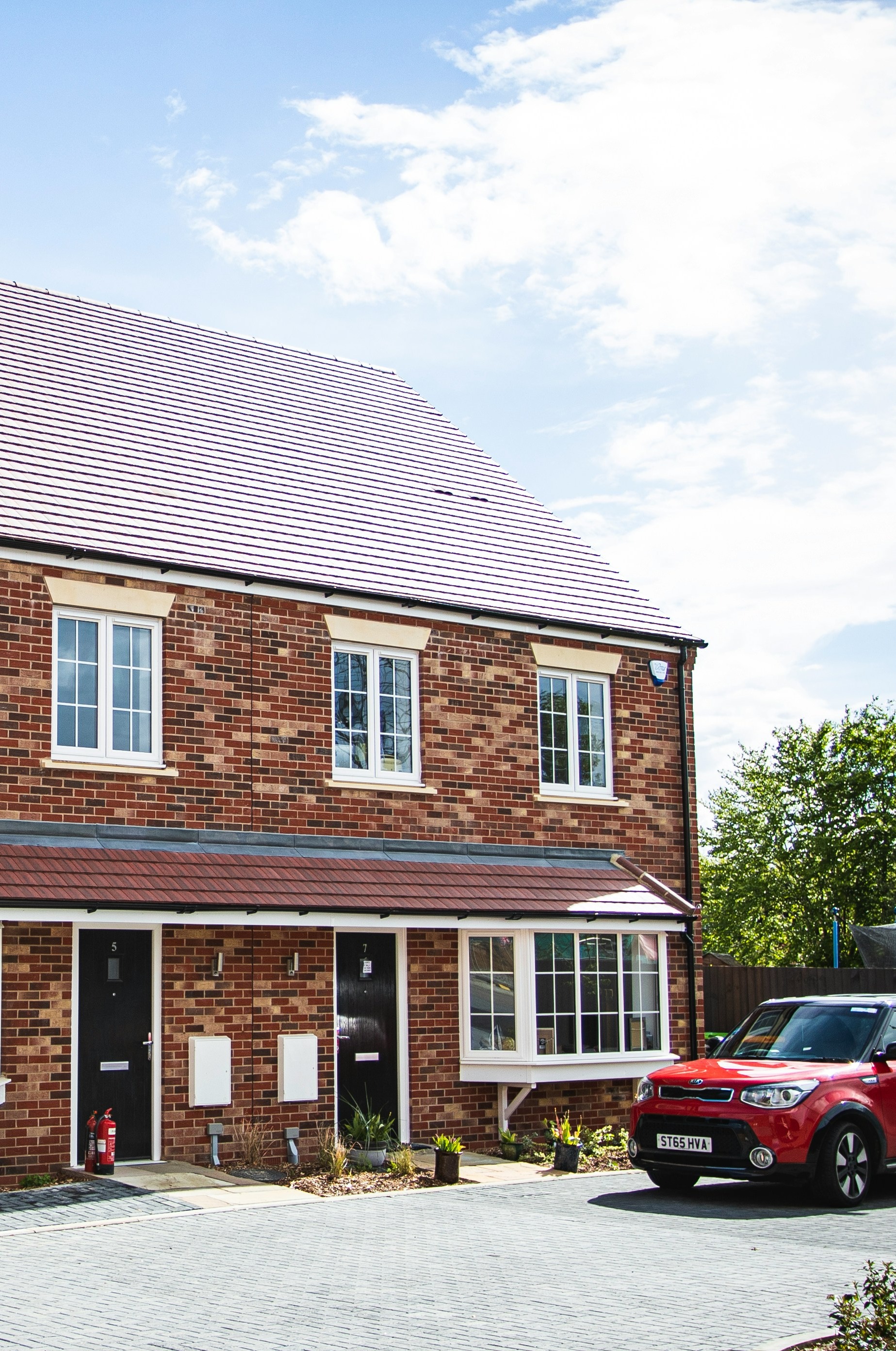
And for many home buyers, new builds are an option. With almost 15% of our customers buying a new build from 2024-2025, and almost 47% of them were first-time buyers.
Here are the 11 questions you should ask when house hunting, especially for a new build property (and some of the perks of buying a new build home).
1. Is the property "standard construction"?
Brokers ask this because many lenders are wary of ‘non-standard’ builds (e.g., concrete prefab, timber-framed, or thatched roofs). If a property is non-standard, your choice of lenders may shrink, and you might need a larger deposit. In the UK, the majority of new-build homes are still considered standard construction, but the definition of ‘standard’ is shifting as the industry evolves.
While traditional brick and block (masonry) construction remains the dominant method in England and Wales, timber framing is now the standard for the vast majority of new builds in Scotland.
Why does it matter?
If you are buying a new build, "standard construction" is the safest bet for mortgage availability and resale value. While Modern Methods of Construction (MMC) are faster and more eco-friendly, some lenders still require specialist surveys or higher deposits for modular or purely "non-standard" builds.
2. Is it freehold or leasehold - and what are the costs?
If it’s a leasehold (common with flats), ask how many years are left. Anything under 85 years can make getting a mortgage difficult. You also need to know the exact ground rent and service charges, as lenders factor these into your "affordability" calculation.
3. What is the Energy Performance Certificate (EPC) rating?
A core theme of New Homes Week is energy efficiency. New builds are often rated A or B, making them eligible for "Green Mortgages" with lower interest rates. Ask for the predicted EPC; a higher rating could save you hundreds on both your mortgage and your monthly bills.
4. Why is the owner selling and how long has it been listed?
If it’s a new build property, reasons for selling are not usually an issue, and there’s no upward chain. However, developers will want to sell properties as soon as possible to save themselves money so if a new build property has been on the market for 6+ months, you might be able to negotiate a lower price.
5. Are there any restrictive covenants or "flying freeholds"?
These are legal quirks that can stop a mortgage application in its tracks. A restrictive covenant might prevent you from extending, while a "flying freehold" (where part of the house hangs over a neighbor's land) is something many lenders flatly refuse to finance.
6. For New Builds specifically - what builder incentives are available?
Many developers may offer schemes like Part Exchange or Deposit Contributions. Ask if these are on the table, as they can significantly reduce your upfront costs and the amount you need to borrow.
7. Has any major work been done, and is there paperwork?
If an older home has an extension, you would ask for the Building Regulations completion certificate. For new builds, ask about the 10-year NHBC warranty (or equivalent), which is a mandatory requirement for almost all mortgage lenders.
8. What are the average utility bills and Council Tax band?
A broker looks at your ‘Total Cost of Ownership’. New homes are built to modern standards, meaning lower heating costs. High utility bills from inefficient older properties and those located in higher council tax bands may eat into the "discretionary income" lenders look at when approving your loan.
9. Is the property in a flood risk area or on a former coal mine?
Lenders run automated desk-top searches. If a house is in a high-risk flood zone, getting affordable buildings insurance can be tough, and without insurance, you can’t get a mortgage. Top tip: Checking this yourself early in the process could save you a wasted valuation fee.
10. What is included in the "standard specification"?
In an older home, you're asking what the seller is taking away. In a new build, you’re asking what the builder is actually putting in.
The Broker’s Perspective: Builders often show "Show Homes" kitted out with top-of-the-range flooring, integrated wine coolers, and landscaped gardens. However, the "standard specification" might just be bare concrete floors and a basic kitchen.
The Financial Trap: If you want those upgrades, the builder will often ask for the cash upfront. A mortgage broker will remind you: Lenders usually won't lend against "optional extras" or furniture packages.
The "Moving Fund" Rule: If the house doesn't come with carpets or turf, you’ll need thousands of pounds in cash the day you move in. We want to make sure you aren't dipping into your mortgage deposit to pay for flooring, as that could change your Loan-to-Value (LTV) and ruin your mortgage deal at the last minute.
11. Is there a Property Report available?
At Mojo, we often recommend getting a detailed property report early. Lenders will only lend based on their own valuation, not the asking price. Ask for a report to see "comparable sales" in the area. This ensures you aren't paying a "new build premium" that the lender’s valuation won't support.
Get into your next home
Whether you’re eyeing a modern new build or a characterful older home, having your Mortgage in Principle ready is the best way to show you're a serious buyer. Talk to one of our experts today to find out your options.
Data used is proprietary to Mojo Mortgages using first time buyer customer data from 2024-2025.